 Luting & Lining Cement
 ROOT CANAL SEALER
 Alginate powder Dental Impression Materials,
 GUTTA PERCHA POINTS
 CALCIUM HYDROXIDE idoform PASTE And Powder
 BLOOD GLUCOSE MEDTER
 DIAMOND BURS all
 Gypsum Plaster
 Breast Pump
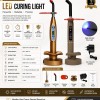
 Light Curing LED Machine
 Examination Gloves – NR Latex Powdered
 Spray (Lidocaine Topical Aerosol USP 15%
 Adhesive Cream and Powder
 Surgical
 EUGINAL LQ /ZINC OXIDE
 Pharmaceuticals
 Silver Alloy/Copper Amalgam
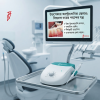
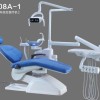 DENTAL UNIT
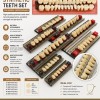 Teeth
Teeth
 SURGICAL BLADES STERILE
 ECG Thermal Paper Roll
 Autoclave /Uv Chamber/Glass Bead/ Sterilizer
 Etching Gel
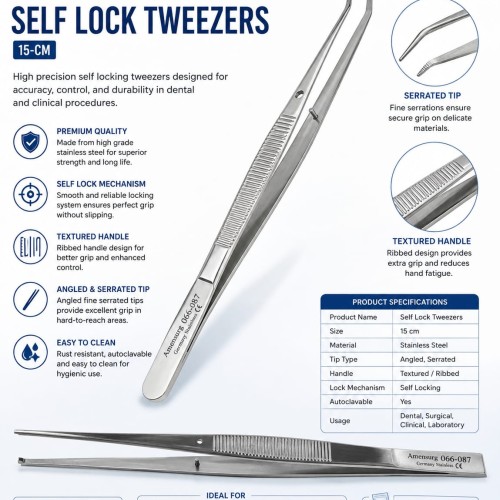
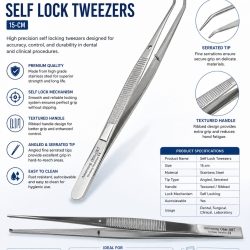
Tweezers (often called Dental Forceps or Pliers) are fundamental handheld instruments used to pick up, hold, and transfer small items into and out of the oral cavity.
Primary Function: Grasping small materials—such as cotton rolls, gauze pads, articulation paper, wedges, endodontic pins, and small restorative items—without direct finger contact.
Key Features:
Angled Working Tips: The tips are bent at an angle (typically $45^\circ$ to $90^\circ$) to provide clear visibility and easy access to posterior areas of the mouth.
Serrated vs. Smooth Tips: Serrated tips provide a firm, non-slip grip on soft materials like cotton, while smooth tips prevent damage to delicate dental components.
Locking Mechanism (Optional): Some specialized tweezers feature a slide-lock mechanism that holds items securely in place without requiring continuous finger pressure.
Common Types in Clinical Practice:
College Tweezers (Item 3 in your original image): Standard angled dental tweezers used for basic cotton and small-item transfer.
Perry / Utility Tweezers (Item 4 in your original image): Fine-tipped, offset tweezers for delicate intraoral placements.
Articulating Paper Forceps (Miller Pliers): Designed with flat, wide tips to hold carbon paper when checking a patient's bite alignment.
Would you like to know more about the cleaning and sterilization protocols for dental tweezers?